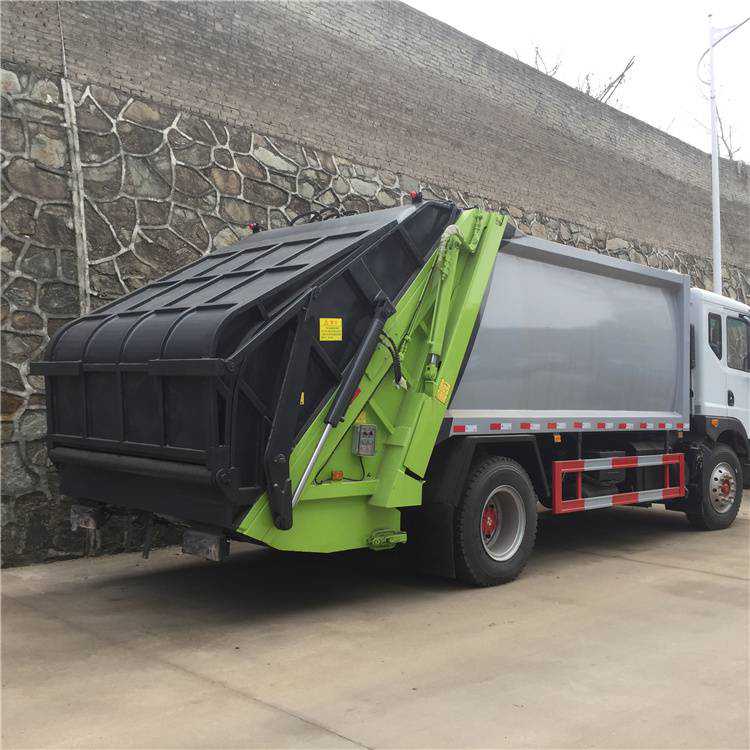
Emerging market buyers choose compression garbage trucks based on price, but they keep trucks running based on after-sales support. Western brands like Volvo and Heil promise quality. Chinese manufacturers deliver speed, reliability, and regional logistics that Western suppliers can't match. This guide shows you exactly why—and how to procure the right garbage truck for your market.
1. THE PROBLEM: Why Western Brands Lose Speed in Asia, Africa, and Middle East
Procurement teams in emerging markets face a hard truth: buying a garbage truck isn't like buying a car. Downtime costs money. Lots of it.
1.1 Slow Spare Parts Delivery: The Hidden Cost of Western Suppliers
Western garbage truck manufacturers—Volvo, Heil, and similar brands—typically ship spare parts from Europe or North America, taking 30–60 days. For a municipal fleet operator in Lagos, Cairo, or Bangkok, this delay is catastrophic. Your 14-cubic-meter compression truck sits idle while garbage piles up. Your crew loses productivity. Your city misses waste collection targets. The real cost? $500–$1,500 per day in lost operational capacity, plus potential contract penalties from municipal authorities.
Western suppliers argue quality justifies waiting. That argument doesn't work when your fleet is down and your budget is bleeding. Emerging market operators need parts fast, not perfect parts eventually.
1.2 Total Cost of Ownership: Why Price Isn't Everything
Procurement teams evaluate total cost of ownership (TCO) across three years: purchase price, fuel consumption (typically $0.80–$1.20 per liter depending on country), maintenance frequency, and parts availability. A Western garbage truck might cost 20% more upfront, but if it's down for 40 days waiting for a hydraulic cylinder replacement, your real costs spike 30–50%. A cheap Chinese truck that runs continuously beats an expensive truck that's broken down half the time.
Chinese compression models address this gap directly by pre-positioning parts regionally and committing to 2–7 day delivery. The math is simple: downtime avoidance saves more than upfront savings cost.
1.3 Regional Emission Standards: The Certification Maze
Middle Eastern buyers require COC (Certificate of Conformity) certification plus local approvals. Southeast Asian markets accept looser Euro 3/4 standards. African regions have mixed requirements. Without proper certification paperwork, your 14-cubic-meter compression truck gets held at port. This isn't a supply issue; it's a compliance issue. A 15–30 day port hold costs as much as the entire trip's logistics.
Emerging market buyers need suppliers who understand local certification requirements—not manufacturers who assume one certificate fits all markets.
2. THE SOLUTION: How Chinese Manufacturers Deliver Faster Support
The technical advantage of Chinese compression garbage trucks lies in standardized international components, regional service networks, and aggressive logistics commitments that Western suppliers simply can't match.
2.1 Standardized International Components: Cummins, Dana Axles, and Proven Hydraulics
The Dongfeng 14-cubic-meter compression model uses a Cummins 6-cylinder 210 horsepower engine—not a proprietary Chinese-only powerplant. You can find Cummins service centers and Dena axle dealers across Southeast Asia, the Middle East, and Africa. The double hydraulic pump and dual multiway valve system from Zhonglian (Sunpet) is battle-tested in extreme conditions—high heat, dust storms, salt air, and overloaded runs that would break lesser systems.
This architecture matters because your truck doesn't depend on rare Chinese-only spare parts. A hydraulic seal leaking? You can find replacements anywhere Cummins operates. An axle bearing failing? Dena parts move through established supply chains. Standard filters, belts, and pump seals move through global distribution networks you already know.
2.2 2–7 Day Spare Parts Delivery: The Competitive Advantage
Chinese suppliers commit to 2–7 day delivery for standard parts (filters, belts, oils, tires), 7–14 days for specialized components (hydraulic cylinders, pumps). For a municipal fleet running 8–10 compression trucks, this difference translates to $50K–$100K annual cost savings from avoided downtime. The logistics aren't magic—Chinese suppliers stock parts regionally in Dubai, Singapore, Lagos, and other hub cities. They understand emerging market shipping patterns and port congestion. They've built redundant supply lines because they know backup isn't optional.
Contrast this with Western brands' 30–60 day cycles. When your compression truck's double hydraulic pump fails, Western suppliers start the clock when they receive your order. Chinese suppliers have the part in stock, inspect it, and ship it within 48 hours.
2.3 Technical Support Without Geographic Barriers
Western suppliers expect you to call during their business hours—9 AM to 5 PM in Europe or North America, which means early morning or late night for emerging market operators. Chinese suppliers staff multiple timezones. They troubleshoot your 14-cubic-meter compression truck in real time via email, video calls, and WhatsApp. When your truck's hydraulic pressure dips at 2 PM Bangkok time, a Cummins-trained Chinese technician can walk your crew through diagnostics while replacement parts ship in parallel.
This isn't just convenience. It's operational continuity. It's knowing that when your fleet needs help, someone answers immediately in a timezone that aligns with your reality.
3. TECHNICAL COMPARISON: Why Standardized Specs Matter More Than Brand Heritage
Understanding the technical equivalence between Chinese National VI and European Euro 6 standards helps you navigate import requirements without surprises. It also shows why Dongfeng's 14-cubic-meter compression model with Cummins 210 horsepower engine works across multiple regions.
3.1 Emission Standards: China National VI vs. Euro 6 Equivalence
China VI (China National VI) for heavy-duty vehicles sets NOx limits comparable to Euro VI. Particulate matter reductions match. Both standards enforce strict emissions controls. The critical requirement: your supplier must provide a COC certificate explicitly confirming equivalence. Without this document, Middle Eastern ports (Jeddah, Dubai) hold your compression garbage truck during compliance verification—adding 15–30 days and $3K–$8K in port fees.
Here's the timeline: COC certification takes 4–6 weeks from application to approval in China. This isn't optional. Demand it upfront. Sean freight from Shenzhen to Jeddah adds 15–20 days. Port clearance adds 10–15 days for documentation plus 5–10 days for on-site emission inspection. Budget 50–60 total days from factory to operational delivery.
Southeast Asia is more relaxed. Vietnam and Thailand often accept China VI without additional testing. Africa varies by port and importer—Lagos moves faster than inland routes.
3.2 Component Reliability in Extreme Conditions: High-Heat and High-Humidity Environments
The Cummins 210 horsepower engine handles sustained 45+ degree Celsius operation in Middle Eastern markets. The 160-liter steel fuel tank—not plastic—survives thermal cycling and expanded fuel volume in high heat. The Dena 9-ton rear axle doesn't overheat on long inter-city hauls carrying compressed waste.
Here's what fails: Hydraulic seals degrade in extreme heat without proper fluid grades. Standard steel components corrode in coastal Africa within 18 months unless protective coatings are specified. Uncoated hydraulic cylinders rust visibly after one season in monsoon Southeast Asia.
Solution: Specify anti-corrosion upgrades at purchase time. Consider 304 stainless steel upgrade for fuel tanks in coastal regions (West Africa, Gulf states). Specify polyurethane or epoxy protective coating on all exposed steel. Request sealed hydraulic cylinders with stainless steel rod sleeves. These upgrades cost $2K–$5K upfront but save $20K–$40K in premature replacement costs.
3.3 Chassis Flexibility: Adjustable Wheelbase for Urban vs. Long-Haul Routes
The DFH1180EX8 chassis supports wheelbase options from 3,800mm (tight city streets in Bangkok, Manila) to 5,800mm (inter-city routes in Middle East). Shorter wheelbase = tighter turning radius = better for residential collection. Longer wheelbase = larger payload capacity = better for regional transfer stations.
Your procurement choice depends on actual route data, not manufacturer specification sheets. Bangkok's narrow sois demand 3,800mm. Cairo's wider roads support 4,700mm. Lagos inter-city hauls prefer 5,300mm. The 10.00R20 18PR steel wire tires handle all configurations, though Southeast Asia rain season favors different tread patterns than Middle Eastern heat.
4. PRACTICAL BUYER ROADMAP: From Certification to First Shipment
Converting technical knowledge into procurement action requires knowing exactly which documents go where and when delays typically occur.
4.1 Middle East Procurement: COC, SAC, and Port-Specific Rules
Timeline Summary:
Weeks 1–4: Apply for COC certification (4–6 week processing window in China)
Weeks 5–7: Sea freight Shenzhen to Jeddah/Dubai (15–20 days)
Weeks 8–10: Port clearance documentation (10–15 days) + emission inspection (5–10 days)
Total: 40–50 days from factory to operational delivery
For Middle Eastern markets (Saudi Arabia, UAE, Kuwait): Demand COC certification + Product Quality Certificate + Emission Testing Report + Certificate of Origin. Missing even one document restarts the clock. Your customs broker should submit electronic copies to destination ports 2 weeks before shipment to pre-clear paperwork and prevent holds.
Specify the 160-liter steel fuel tank as standard—you'll need that range for long transport hauls in 45+ degree heat. The Cummins 210 horsepower engine with double hydraulic pump configuration handles continuous duty in extreme heat, but verify coolant specifications for local conditions.
4.2 Southeast Asia Procurement: Emission Testing at Destination Port
Timeline Summary:
Weeks 1–3: Prepare documentation + hire local customs broker ($1,000–$3,000)
Weeks 4–6: Sea freight (20–30 days depending on port access)
Weeks 7–10: Emission/safety testing at destination port (15–30 days)
Total: 40–50 days
For Southeast Asia (Thailand, Vietnam, Philippines): Emission and safety inspections happen at destination ports—not at Chinese factories. Prepare detailed Chinese-English technical manuals and spare parts diagrams upfront. Hire a local customs broker who specializes in vehicle imports. They prevent delays and unexpected charges.
Provide comprehensive documentation: product specification sheets, hydraulic system diagrams, maintenance intervals for the 14-cubic-meter compression chamber, spare parts list with part numbers. Local brokers know which documents Thai or Vietnamese customs will demand; experienced brokers prevent 15–30 day investigation delays.
4.3 Africa Procurement: Corrosion Coating, Spare Parts Pre-positioning, and Extended Warranty
Timeline Summary:
Weeks 1–2: Specify anti-corrosion coating + arrange parts pre-positioning
Weeks 3–7: Sea freight (20–40 days depending on port access)
Weeks 8–10: Customs clearance (15–30 days, varies widely by port)
Total: 50–60 days
For Africa (Nigeria, Kenya, Tanzania, Uganda): Specify anti-corrosion coating as a standard upgrade—high salt environments (coastal West Africa) and rainy seasons corrode uncoated steel within 18 months. The Dongfeng's 160-liter steel fuel tank and exposed hydraulic lines need protection.
Arrange spare parts pre-positioning at regional hubs (Lagos, Dubai, Nairobi) to reduce supply-chain delays. Stock high-rotation parts: hydraulic seals, engine belts, filter cartridges, pump wear plates. Request 24-month extended warranty (vs. 12-month standard) to cover regional service-network gaps. African markets have fewer authorized service centers, so extended warranty provides critical protection.
Request the 10.00R20 18PR steel wire tires—they handle rough roads better than radials. Build in 20–40 days for sea freight plus 15–30 day customs clearance window. African ports move at different speeds; Lagos moves faster than inland routes like Kinshasa.
4.4 After-Sales Agreement: SLA, Distributor Networks, and Backup Plans
Get a written Service Level Agreement (SLA) before signing purchase contracts. Specify: standard parts 2–7 days, specialized parts (hydraulic cylinders, pumps) 7–14 days, custom/non-standard parts 14–30 days. Verify your supplier has authorized distributors in-country. If not, evaluate remote technical support viability—language barriers and timezone alignment matter more than you'd think.
Include contract language protecting direct spare parts access if the local distributor quits. Chinese suppliers sometimes depend entirely on distributors. If that distributor abandons the market or conflicts arise, your fleet loses parts access overnight. A direct-access clause prevents that catastrophe.
Request quarterly parts usage reports and inventory forecasting from your distributor. Proactive stock management beats reactive emergency ordering every time.
QUICK REFERENCE: Procurement Timeline & Key Milestones
Market Region | COC Timeline | Sea Freight | Port Clearance | Total Days | Key Risk |
|---|---|---|---|---|---|
Middle East (Saudi, UAE, Kuwait) | 4–6 weeks | 15–20 days | 15–25 days | 40–50 | Missing COC = port hold |
Southeast Asia (Thailand, Vietnam, Philippines) | None required | 20–30 days | 15–30 days (local testing) | 40–50 | Documentation gaps at local ports |
Africa (Nigeria, Kenya, Tanzania, Uganda) | None required | 20–40 days | 15–30 days | 50–60 | Corrosion risk if uncoated |
KEY IMPLEMENTATION CHECKLIST
✓ Demand written COC certification 4–6 weeks before shipment
✓ Hire local customs broker for destination country ($1,000–$3,000)
✓ Pre-position spare parts at regional hubs (Dubai, Singapore, Lagos)
✓ Specify anti-corrosion coating for coastal regions (304 stainless upgrade for fuel tank)
✓ Get written SLA: standard parts 2–7 days, specialized parts 7–14 days
✓ Include contract clause protecting direct spare parts access
✓ Request extended warranty (24 months) for African markets
✓ Prepare Chinese-English technical manuals + spare parts diagrams upfront
Why Chinese Compression Garbage Trucks Win
When you buy a 14-cubic-meter compression garbage truck for emerging markets, the initial FOB price from Shenzhen ($35K–$55K depending on engine spec) matters less than the operational reality of the next 3 years. Chinese manufacturers like Dongfeng—equipped with Cummins 210 horsepower engines, standardized components (Dena axles, Zhonglian hydraulics), and aggressive spare parts logistics (2–7 day regional delivery)—deliver that operational reality faster than Western brands.
The advantage isn't being cheaper. It's being available when your crew needs parts, available when your fleet needs technical support, and available on your schedule—not corporate headquarters' schedule 10,000 miles away.
Ready to find the right garbage truck for your market? Start by identifying your priority: Is it upfront cost? Regional spare parts availability? Extended warranty? The answer determines whether you choose Western heritage or Chinese speed.
Latest articles
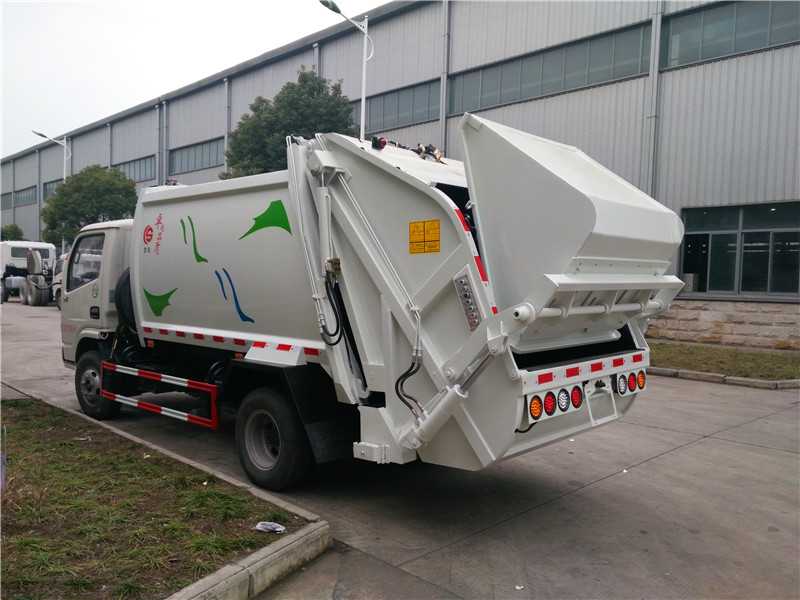
How to Export Blue 3m³ Hook Arm Garbage Truck to Saudi Arabia & UAE: SABER Certification & Customs Guide 2025
2025-12-20
6x4 vs 4x2 Garbage Truck Chassis: Complete Regional Selection Guide
2025-12-20
Hydraulic Electrical Safety Systems in Automated Garbage Truck Remote Control: Complete Global Compliance Guide
2025-12-19