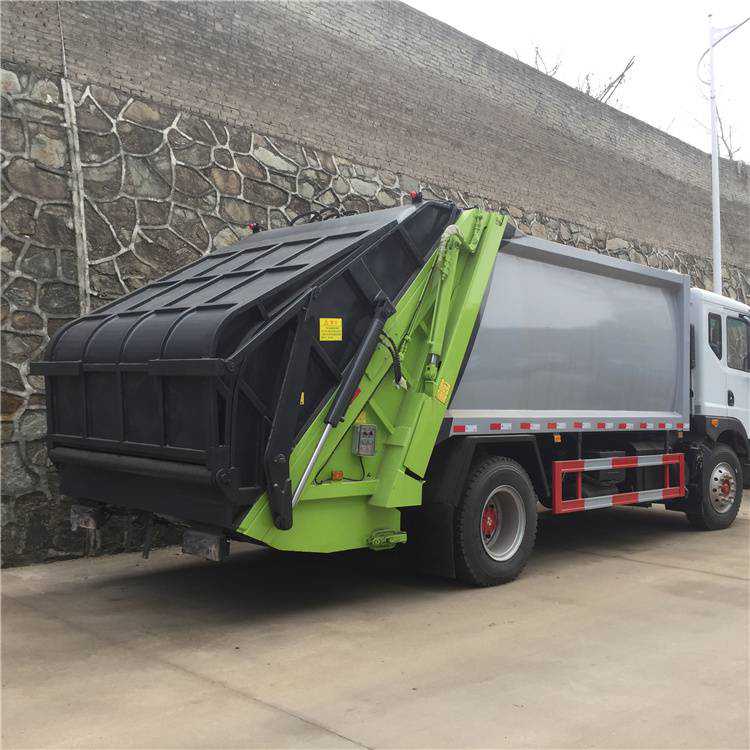
Choosing between a 6x4 and 4x2 garbage truck chassis isn't just about specifications—it's about matching the right autocar garbage truck to your specific market, road conditions, and regulatory environment to maximize waste collection efficiency and minimize long-term operational costs. From Southeast Asian mountain routes to Middle Eastern desert highways, from European city centers to African remote routes, the optimal garbage truck chassis depends entirely on where and how you operate. This guide walks you through the decision process region by region.
1. Problem Definition: Why Chassis Configuration Matters for Your Market
Selecting the wrong garbage truck chassis creates costly problems: regulatory violations, insufficient capacity, poor fuel efficiency, and maintenance headaches. Understanding the core differences upfront prevents these mistakes.
1.1 Understanding 6x4 vs 4x2 Basic Specifications
A 6x4 garbage truck has two rear axles with eight wheels; a 4x2 has one rear axle with six wheels. This architectural difference directly impacts weight capacity, traction, and road maneuverability. Our CL5250ZYS6HQ model uses a 6x4 Dongfeng Huashen chassis. This dual rear axle configuration distributes weight more evenly, which means better traction on slopes and uneven terrain compared to 4x2 alternatives.
1.2 Weight Capacity & Regulatory Compliance Fundamentals
Our 6x4 garbage truck model carries a 25,000-kilogram total weight capacity. Typical 4x2 garbage trucks operate at 18,000–22,000 kilograms—significantly lower. Different countries enforce different axle weight limits. Middle Eastern countries typically allow higher axle weights than European countries. Southeast Asian urban centers often have strict restrictions. Understanding your local regulations determines which garbage truck chassis you can legally operate.
1.3 Cost-vs-Capacity Trade-off Across Global Markets
A higher-capacity 6x4 requires more fuel and more tire maintenance. But it collects more waste per trip, reducing overall trips and labor costs. A 4x2 garbage truck costs less to fuel but needs more collection runs to move the same volume. The math changes completely depending on your market's fuel prices, labor rates, and waste volume requirements. In cost-sensitive Southeast Asia, the 4x2 advantage grows. In high-efficiency Middle Eastern operations, the 6x4 advantage dominates.
2. Technical Specifications: Engine Power, Emissions & Control Systems
Comparing specifications clarifies which garbage truck chassis handles your specific operating conditions. Power, emissions compliance, and automation all directly impact real-world performance.
2.1 Engine Power: 260-270 Horsepower in Real-World Mountain & Desert Conditions
Our garbage truck offers Cummins 260-horsepower or Yuchai 270-horsepower engines—191 kilowatts of power. A 6x4 distributes this power across dual rear axles, enabling better traction on steep grades. Southeast Asian mountain routes benefit most from this configuration. In flatter regions like the Middle East, the extra power moves more volume without straining the engine. A typical 4x2 garbage truck runs 150–200 horsepower, sufficient for urban collection but limited for long-distance or heavily loaded routes.
2.2 GB17691-2018 National VI vs Euro 6 Emissions Certification
Our garbage truck meets China's GB17691-2018 National VI standard. For European imports, this translates to Euro 6 compliance. Middle Eastern markets require COC (Certificate of Conformity) certification—a separate process requiring three key documents: product compliance certificates, laboratory test reports proving the sealed compression system works, and product origin certificates. Both 6x4 and 4x2 configurations can achieve these certifications with proper preparation. Plan 4–6 weeks for COC certification processing and potential on-site inspection in Middle Eastern markets. European CE certification typically takes 3–4 weeks once documentation is complete.
2.3 PLC Control Systems: Three Operation Modes for Different Fleet Needs
Integrated Siemens PLC control enables automatic, manual, and remote operation modes with safety interlocking—critical for large-scale municipal operations. Automatic mode handles routine collection. Manual mode gives drivers direct control for tricky terrain. Remote operation mode allows safe operation in hazardous environments. European fleet managers value this automation for safety protocols. African and Southeast Asian operators appreciate the flexibility for varying road conditions and waste types. This feature directly reduces operator training time and improves workplace safety.
2.4 Dual Pollutant Collection Tanks: Secondary Contamination Prevention
The dual sewage collection tank design with specialized drainage valves prevents waste liquid dripping during transport. This is critical in Middle Eastern desert environments where secondary contamination violates local environmental regulations. It's equally important in high-density urban areas where dripping waste creates public health risks. The dual tank design also allows operators to manage organic and inorganic waste streams separately if needed, adding operational flexibility.
3. Regional Selection Guide: Market-Specific Chassis Recommendations
The best garbage truck chassis depends entirely on your specific market. This section maps regions to optimal configurations based on terrain, regulations, and operational priorities.
3.1 Southeast Asia: 4x2 for Cities, 6x4 for Industrial Zones
Vietnam, Thailand, and Myanmar require different solutions. Urban centers like Bangkok and Hanoi benefit from 4x2 garbage trucks—better maneuverability in narrow streets (often only 6–8 meters wide), lower fuel costs critical for budget-conscious municipal budgets, and easier parking in congested areas. Industrial parks, large residential complexes (100+ units), and longer inter-province routes favor our 6x4 model with 25m³ sealed compression box. For a typical Bangkok district managing 50 tons daily, a 4x2 makes sense. For a 200-ton industrial park transfer operation, 6x4 efficiency wins.
3.2 Middle East: 6x4 Dominates for Efficiency & Environmental Control
Saudi Arabia, UAE, and Qatar have superior road infrastructure and flat terrain spanning hundreds of kilometers. The 6x4 garbage truck moves significantly more waste per trip due to higher weight capacity—often critical for desert regions where collection points span vast distances. Q345 special steel construction with arc-reinforcing design resists desert salt corrosion better than standard alternatives. The dual pollutant tank system directly addresses Middle Eastern environmental compliance requirements. Preparation timeline: Allow 4–6 weeks for COC certification, additional 2–3 weeks for potential on-site inspection, then 25–30 days for FOB Shenzhen shipping to Middle Eastern ports. Total lead time from order to delivery typically runs 8–10 weeks. Choose suppliers offering 304 stainless steel treatment for hydraulic components if operating in high-salinity desert environments.
3.3 Europe: 4x2 in Urban Zones, 6x4 in Suburban Logistics
European cities restrict heavy vehicle access during peak hours—often 7 AM to 10 AM and 4 PM to 7 PM. A 4x2 garbage truck qualifies for more area access permits and generates less congestion, critical for densely populated cities like Amsterdam, Berlin, or Paris. Suburban collection and inter-municipal waste transfer routes accommodate 6x4 chassis better. European fleet managers prioritize the Siemens PLC control system for operational automation and safety protocols. CE certification timeline: 3–4 weeks once documentation is submitted. Our Siemens PLC system and GB17691-2018 documentation accelerates this process. European markets increasingly favor 4x2 for urban operations due to environmental restrictions on larger vehicles.
3.4 Africa: 6x4 Reliability for Unpredictable Road Conditions
Kenya, South Africa, and Nigeria have variable road quality—some highways are excellent, others unpaved and heavily worn. A 6x4 garbage truck handles this unpredictability better. The Dongfeng Huashen chassis has proven local support networks across major African markets. The sealed compression box prevents waste spillage on rough terrain. For Africa, prioritize choosing suppliers with regional service coverage and spare parts availability. A single broken hydraulic line in rural Kenya means 2–3 weeks without parts if your supplier lacks local presence.
4. Procurement Checklist: From Specification to Delivery
Moving from decision to purchase requires systematic preparation. This section provides a step-by-step checklist to ensure compliance, cost optimization, and successful deployment.
4.1 Step 1: Verify Local Axle Weight Regulations & GVWR Limits
Contact your national transportation authority for:
Maximum axle weight limits (vary significantly across regions—typically 18–20 tons per axle in Europe, 20–25 tons in Middle East, 15–18 tons in Southeast Asia)
Gross vehicle weight rating (GVWR) allowances
Vehicle length/width restrictions in your city
Emission certification requirements specific to your country
Our 6x4 model with 25,000kg capacity complies with international standards, but local regulations determine whether you can legally operate it in your market. Budget 1–2 weeks for this verification step.
4.2 Step 2: Map Collection Routes & Assess Road Conditions
Document:
Average road width (directly affects 4x2 vs 6x4 feasibility in city centers)
Hill steepness percentages (affects engine power requirements—mountain routes need 260+ hp)
Distance to landfill/transfer stations (drives fuel consumption calculations)
Surface type—asphalt, gravel, mixed (affects maintenance frequency and tire wear)
This data directly informs whether 6x4 or 4x2 maximizes your operational efficiency. A 200-kilometer daily route with 15% grades clearly favors 6x4 power and capacity.
4.3 Step 3: Calculate 3-Year Total Cost of Ownership (TCO)
Compare:
Fuel consumption: 6x4 uses ~12% more fuel per liter but carries 20% more waste per trip
Tire replacement: 8 tires for 6x4 vs 6 tires for 4x2 (approximately $800–1,200 difference per replacement cycle in developing markets)
Maintenance parts availability in your region (critical in Africa and Southeast Asia)
Driver training investment: 3–5 days additional training for 6x4 dual axle systems
Insurance premium differences: Often 10–15% higher for 6x4 due to higher vehicle value
A 500-ton daily municipal operation in Thailand might save $2,000–3,000 monthly in fuel costs with 4x2 efficiency, but lose collection-speed advantages. Run your specific numbers.
4.4 Step 4: Prepare Certification Documentation Package
For Middle Eastern imports (COC certification):
Product compliance certificate (from manufacturer)
Laboratory test report proving sealed compression system and dual pollutant tanks work correctly
Product origin certificate
Emission standard declaration (GB17691-2018 National VI)
Allow 4–6 weeks processing time
Budget $800–1,500 for COC verification fees
For European imports (CE certification):
CE mark documentation
Technical file proving Siemens PLC safety systems
GB17691-2018 to Euro 6 equivalence declaration
Allow 3–4 weeks processing time
Our documentation streamlines this process significantly
Build 6–8 weeks total lead time for international certification and customs clearance.
4.5 Step 5: Coordinate Logistics & Verify On-Site Infrastructure
A 6x4 garbage truck requires larger shipping containers and specialized heavy-lift equipment. FOB Shenzhen shipping timelines: 25–30 days to Middle East, 18–24 days to Southeast Asian ports, 20–28 days to European ports. Confirm your facility can accommodate dual rear axles for servicing. Train your maintenance team on dual pollutant tank drainage systems before the first collection day. Ensure spare parts availability through your supplier's regional network. For developing markets, request a spare parts starter kit (hydraulic hoses, filters, seal kits).
Quick Reference Table: 6x4 vs 4x2 Garbage Truck Specifications
Specification | 6x4 Model (CL5250ZYS6HQ) | Typical 4x2 Model |
|---|---|---|
Total Weight Capacity | 25,000 kg | 18,000–22,000 kg |
Compression Box Volume | 25 m³ | 18–20 m³ |
Engine Power Options | Cummins 260 hp / Yuchai 270 hp | 150–200 hp |
Emissions Standard | GB17691-2018 National VI | Same (varies by supplier) |
Tire Count | 8 tires | 6 tires |
Turning Radius | Larger (city center challenges) | Smaller (urban advantage) |
Fuel Consumption | ~35–40 L per 100 km | ~28–32 L per 100 km |
Waste Per Trip | Higher capacity | Lower capacity |
COC Certification Timeline | 4–6 weeks | 4–6 weeks |
FOB Shenzhen Shipping | 25–30 days | 25–30 days |
Selecting your garbage truck chassis is the foundation of cost-effective waste management. A 6x4 garbage truck excels in sprawling metro areas, industrial parks, and long-distance municipal routes. Higher capacity means fewer trips. The sealed 25m³ compression box and dual pollutant tanks handle dense urban waste better than smaller alternatives. A 4x2 garbage truck wins in constrained city centers, areas with strict emissions restrictions, and regions where fuel costs dominate your budget.
Ready to find the right garbage truck for your market? Contact our sales team with your route details, local regulations, and annual waste volume. We'll provide a custom quote and timeline specific to your region. Our regional technical teams in Southeast Asia, Middle East, Europe, and Africa stand ready to support your procurement process from specification through successful deployment.
Latest articles
After-Sales Support Advantage: Why Chinese 14-Cubic-Meter Compression Garbage Trucks Outperform in Emerging Markets
2025-12-20
How to Export Blue 3m³ Hook Arm Garbage Truck to Saudi Arabia & UAE: SABER Certification & Customs Guide 2025
2025-12-20
Hydraulic Electrical Safety Systems in Automated Garbage Truck Remote Control: Complete Global Compliance Guide
2025-12-19